
Stay Connected
Stay up to date on our work to prevent and end homelessness in Winnipeg.
Sign up for news, resources, events, and community updates from End Homelessness Winnipeg.
Nearly half of respondents had been admitted to hospital in the previous year, and among those discharged, only 11.8% reported leaving hospital to a permanent housing situation.
By contrast, 38.0% were discharged to temporary or unstable accommodations, 29.2% to emergency shelters, and 27.5% to unsheltered locations such as encampments or public spaces.
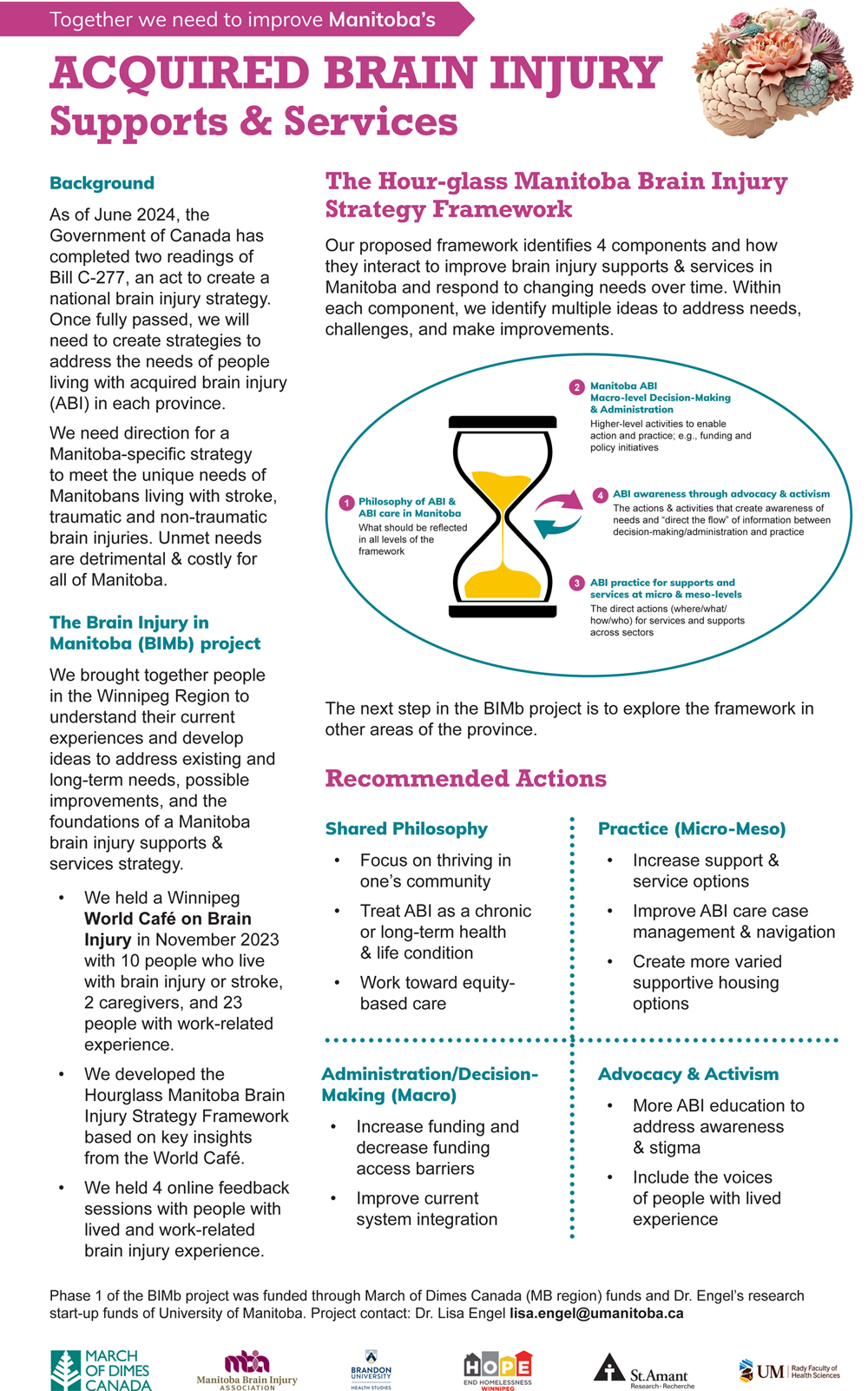
Acquired Brain Injury (ABI) is a leading cause of disability in Manitoba and a significant, often overlooked contributor to housing instability and homelessness. It can result from traumatic events like vehicle crashes or assaults, or from non-traumatic causes such as strokes, overdoses, or infections. Its effects on memory, judgment, emotional regulation, and daily functioning can be lifelong.
Many Manitobans living with ABI face unmet needs due to underfunded, fragmented support systems. Without timely diagnosis, care coordination, and supportive housing, they face increased risks of poverty, unemployment, and homelessness.
End Homelessness Winnipeg recognizes ABI as both a health condition and a social determinant of homelessness.
Prevention means supporting early diagnosis, wraparound care, and equitable housing access, particularly for those at heightened risk, including
Indigenous people, newcomers, those with co-occurring conditions, and individuals discharged from institutions without adequate support.
Investing in ABI awareness, trauma-informed care, and coordinated housing is essential to preventing homelessness and ensuring all Manitobans can live with dignity and support.
End Homelessness Winnipeg supports a prevention-focused approach that ensures no one is discharged into homelessness. Through partnerships with hospitals, Indigenous health agencies, and community-based housing providers, we advocate for coordinated discharge planning that includes timely housing referrals, access to transitional or supportive housing, and ongoing case management.
When housing is integrated into health care discharge processes, people experience better outcomes, lower rates of return to institutional care, and stronger community connections. Preventing homelessness at the hospital door is essential to building a healthier, more equitable Winnipeg.


200-1065 Portage Avenue
Winnipeg, Manitoba, Canada, R3G 0R8
x 204-942-8677 A info@endhomelessnesswinnipeg.ca
