Stay Connected
Stay up to date on our work to prevent and end homelessness in Winnipeg.
Sign up for news, resources, events, and community updates from End Homelessness Winnipeg.
Youth exiting care should be entering adulthood with stability, support, and a safe place to call home, not into homelessness. Yet in Winnipeg, many aging out of Child and Family Services (CFS), particularly Indigenous youth, are overrepresented in the homeless population. According to the 2024 Winnipeg Street Census, 52.0% of people experiencing homelessness had a history in care, and 22.1% were under 30.
Through the A Right to Home initiative, End Homelessness Winnipeg is leading a collaborative, rights-based inquiry into how youth can be better supported to thrive in and out of care. With a trauma-informed, anti-oppressive lens, this project centers the voices of youth with lived experience and identifies what's missing in current supports.
Project Partners: Assembly of Manitoba Chiefs (AMC), Community Education Development Association (CEDA), Knowles Centre, Manitoba Advocate for Children and Youth (MACY), Manitoba Inuit Association, Manitoba Métis Federation (MMF), New Directions, Southern Chiefs' Organization (SCO), RaY - Resource Assistance for Youth, Rossbrook House, Shawenim Abinoojii, The Link Youth and Family Supports, and Voices: Manitoba Youth In Care Network.


~
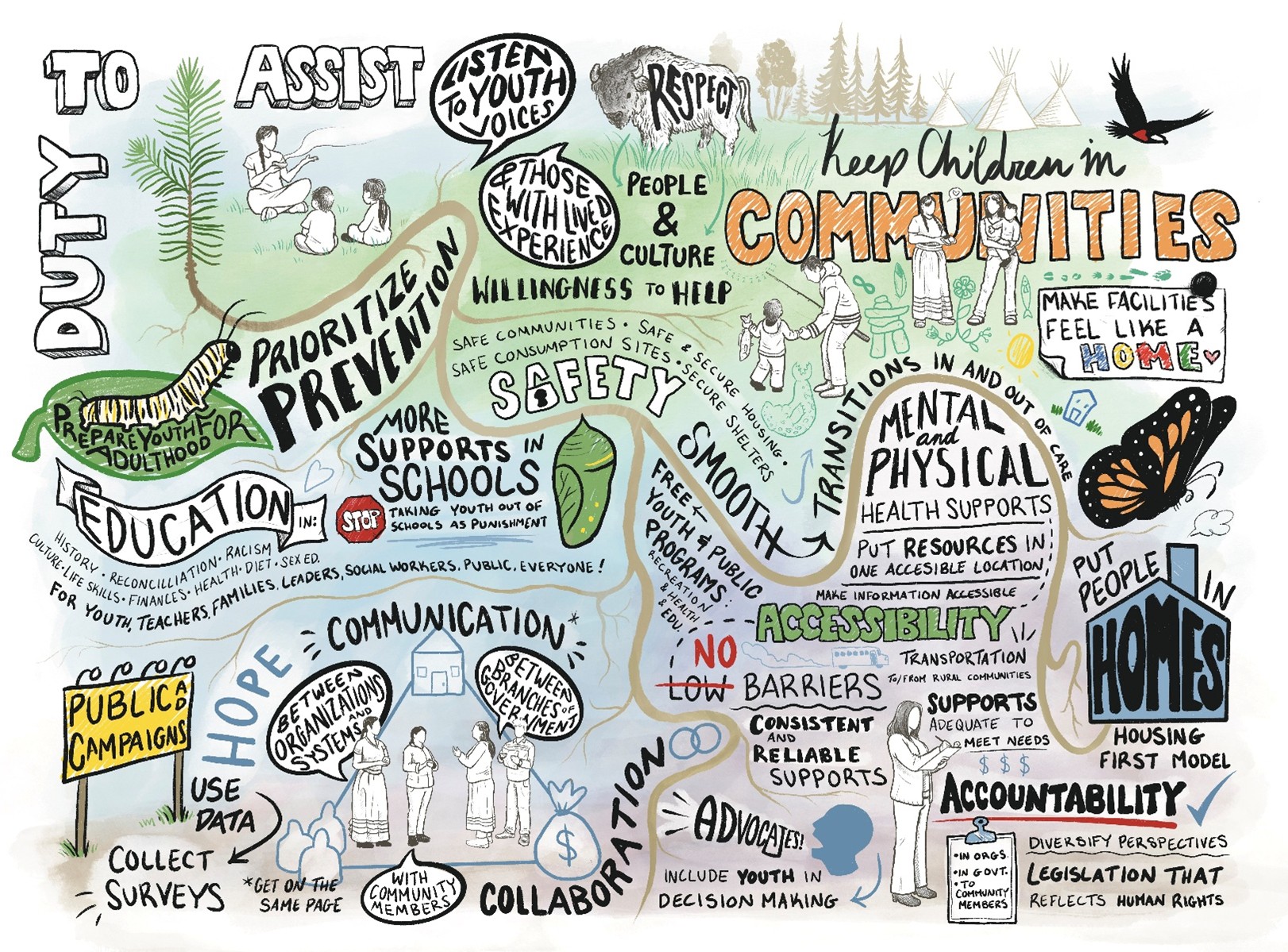
End Homelessness Winnipeg is championing the implementation of a Duty to Assist framework, a legally enforceable, rights-based approach that mandates local authorities to take proactive steps to prevent youth homelessness. Inspired by successful legislation in Wales, this model requires timely, coordinated interventions that prioritize stable housing and wraparound supports over emergency responses.
In October 2024, End Homelessness Winnipeg convened a three-day gathering that brought together Indigenous youth leaders, service providers, and government representatives to explore how Duty to Assist could be adapted locally. The event emphasized culturally grounded, youth-led solutions and the importance of collaboration across sectors to uphold the right to housing.
Winnipeg can move from reactive crisis management to a preventive, justice-informed system by embedding Duty to Assist into policy and practice that ensures no young person is left without a home.
In addition to the Duty to Assist project, End Homelessness Winnipeg continues to invest in youth-focused organizations that are helping young people across Winnipeg find safety, stability, and connection.
These organizations provide housing supports, cultural connection, outreach, advocacy, and wraparound care that help youth move through difficult transitions and build stronger pathways into adulthood.
Youth-serving organizations supported through this work include The Link Youth and Family Supports' Youth Hub, Resource Assistance for Youth's Housing With Supports, Ndinawemaaganag Endaawaad's Bridges Back, Shawenim Abinoonji's Mamengwaa and Pan Am Place's A Place for Young Men
Together, these investments strengthen Winnipeg's youth homelessness response by supporting young people where they are, reducing barriers to housing, and helping create the conditions for long-term stability.


200-1065 Portage Avenue
Winnipeg, Manitoba, Canada, R3G 0R8
x 204-942-8677 A info@endhomelessnesswinnipeg.ca
